A side project can start with nothing more than an idea, a skill, or a product that someone wants to share with the world. The challenge comes when that idea needs to become a real online business. At that point, having a simple social media profile may not be enough. A dedicated website can give the project a home, make it easier for people to understand the offer, and create a foundation for future growth. Hostinger brings together website creation, hosting, domains, business email, ecommerce, SEO, and AI-powered tools, making it possible to develop many parts of an online project from one platform.
Start With One Clear Business Idea
A successful online project does not necessarily need a complicated business model from the beginning. In fact, starting with one clear idea can make the first version of a website much easier to build. The project could involve selling handmade products, offering freelance services, publishing educational content, creating digital products, providing consultations, or developing a small online store.
Before creating the website, think about what the visitor should understand within the first few seconds. What are you offering? Who is it for? What problem does it solve? What should the visitor do next?
These questions can shape the entire website structure. A freelancer may need a homepage, services page, portfolio, and contact section. A product-based business may require categories, product pages, payment options, and delivery information. Someone testing an idea might only need a landing page and an enquiry form at first.
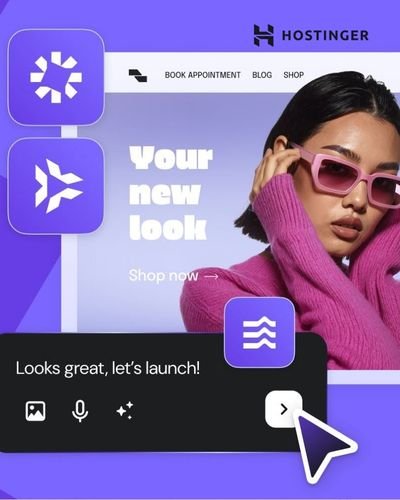
Hostinger’s AI Builder can create websites from a description of the idea, while its templates cover business websites, portfolios, blogs, ecommerce projects, booking websites, and other formats. This allows a new business owner to begin with a practical structure instead of designing every element from an empty page.

Build a Website That Explains the Offer
Once the idea is clear, the next step is turning it into a website that communicates the offer naturally. A beautiful design can attract attention, but visitors also need useful information before they decide whether to contact or buy from a business.
The homepage should quickly communicate what the business does. Instead of filling the first section with complicated explanations, use a straightforward headline and a short description. A clear call to action can then guide visitors toward the next step.
Other pages should answer the questions customers are likely to have. A service business could explain its process and pricing structure. A store could provide detailed product information. A creator could show previous work. A membership project could explain what customers receive after joining.
Hostinger’s current AI Builder supports both AI-generated creation and manual editing, so users can start with an automatically generated website and then adjust text, layouts, images, and functionality themselves. It also supports features such as SEO tools, Google Analytics, Google Ads, Meta Pixel, and other integrations on applicable plans.
This combination is useful for a side project because the website can begin simply and become more detailed as the business learns what customers actually need.
Give Your Side Project a Professional Identity
A website becomes more memorable when its visual identity is consistent. This does not mean that a new business needs an expensive branding package. A small set of carefully chosen colours, fonts, images, and design elements can already create a recognisable appearance.
The domain name is an important part of that identity. Ideally, it should be easy to remember, relevant to the project, and simple enough to communicate verbally. If the business name is difficult to spell, potential customers may struggle to find the website again.
Professional email can also make everyday communication more organised. Instead of using a personal email address, a business can communicate through an address connected to its own domain. Hostinger currently includes business email options with its website and hosting plans, with the exact number of mailboxes depending on the selected plan.
The same visual identity should continue across the website, email communication, social media profiles, and promotional materials. Consistency helps visitors recognise that different channels belong to the same business.
For a side project, this can make an important difference. Even when the business is still small, a professional and consistent presentation can make the project easier for customers to understand and remember.
Turn Visitors Into Customers
Getting someone to visit a website is only the beginning. A business website also needs to make the next step easy. Depending on the project, that next step might be purchasing a product, booking a service, submitting an enquiry, joining a mailing list, or downloading a digital product.
The website should therefore avoid making visitors search for important information. Product pages should explain what is being sold. Service pages should describe what customers receive. Contact options should be visible. Checkout should be straightforward when the website sells directly.
Hostinger’s current tools support ecommerce, bookings, digital products, subscriptions, and other online business models. Its AI Builder can also help users create or manage stores through an AI assistant, while applicable plans include ecommerce functionality.
This gives side-project owners room to experiment. Someone might begin by selling a small collection of products and later add more categories. A freelancer could start with a contact form and eventually introduce online bookings. A content creator might begin with a blog and later offer digital products or subscriptions.
The important point is to build around the customer journey rather than simply adding as many features as possible. Every page should have a purpose, and every important action should be easy to find.
Use AI to Save Time on Repetitive Work
Running a new online business involves much more than creating a website. There are emails to write, content to prepare, pages to update, marketing ideas to develop, and technical issues to manage. AI can help reduce some of the repetitive work involved in these tasks.
Hostinger currently offers an AI ecosystem that covers website creation, content, images, SEO, email marketing, and business automation. Its Hostinger Agent can also help with tasks such as editing, managing, troubleshooting, and migrating websites through chat.
The AI Builder can also work from an existing website URL, image, or PDF, allowing users to use existing material as a starting point instead of rebuilding everything manually. Hostinger’s newer AI Builder experience also supports creating web apps and adding functions such as databases, user accounts, file storage, and integrations.
However, automation should not mean publishing everything without checking it. AI-generated text should be reviewed for accuracy and adjusted to sound like the actual business. Product information, prices, policies, contact details, and brand messages should always be verified.
Used thoughtfully, AI can give a small business owner more time to focus on customers, products, and strategy instead of spending every hour on repetitive website tasks.
Grow the Website Alongside the Business
A side project does not need to become a huge business immediately. The website can grow gradually as the idea develops. Starting with a manageable setup can make it easier to understand what customers actually respond to before investing time and money into additional features.
Once the website begins receiving visitors, analytics can reveal useful patterns. You may discover which pages attract the most attention, where visitors leave, which products receive more interest, or which marketing campaigns generate enquiries. These insights can then guide future improvements.
Hostinger provides website analytics and integrations such as Google Analytics, along with SEO and marketing features designed to help businesses attract and understand visitors. Its current platform also supports email marketing, allowing businesses to create campaigns and reconnect with previous visitors or customers.
Security and maintenance should also remain part of the growth plan. Hostinger’s hosting services include features such as SSL, backups, CDN options, and support, depending on the plan.
The result is a website that can evolve instead of becoming outdated after its first launch. A side project might begin as a simple landing page, become a portfolio, develop into an online store, and eventually grow into a larger digital business.
The most important step is simply to create a useful starting point. You do not need every feature on day one. A clear idea, a suitable domain, useful content, an easy customer journey, and reliable hosting can provide the foundation. As the project gains experience and customers, additional tools can be introduced when they solve a real business need.
Hostinger brings many of these building blocks together, allowing creators and small businesses to move from an initial idea toward a more complete online operation without needing to manage every technical component separately.